TESA is a synthetic analog of growth hormone-releasing hormone (GHRH) studied for its interaction with the GHRH receptor and its role in growth hormone signaling. Research involving this peptide has examined pituitary signaling, endogenous growth hormone release, IGF-1 modulation, and metabolic pathways associated with adipose tissue and lipid processing.
The TESA peptide is also of interest in preclinical research examining visceral adipose tissue metabolism and related cellular processes. Additional experimental research has explored its activity in neurobiological models, providing further interest in the relationship between GHRH-related signaling and neurological pathways.
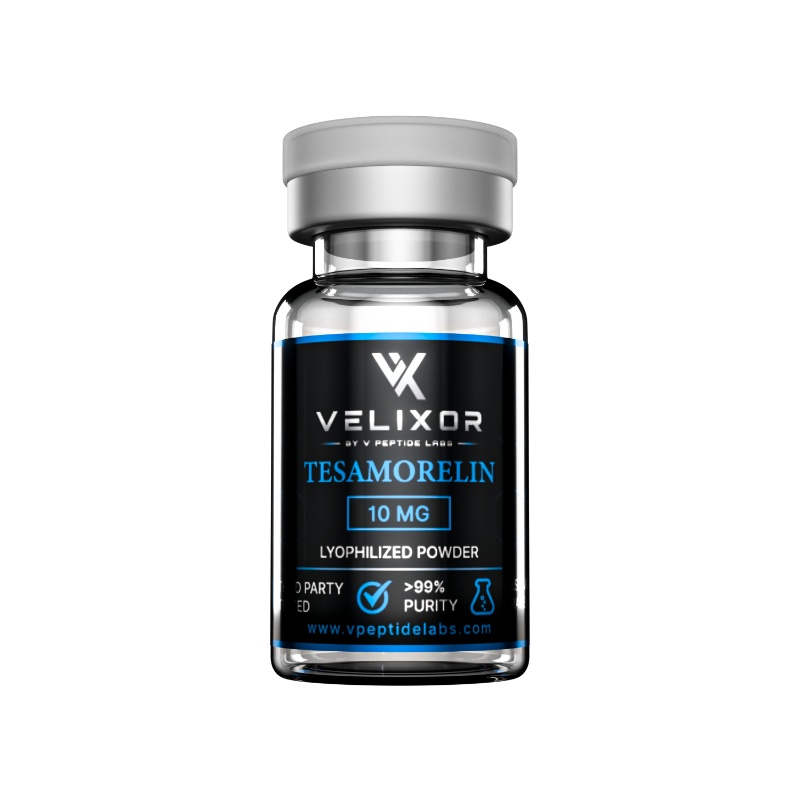
This research material is available in 10mg and 20mg quantities and is supplied as a lyophilized powder. It is intended solely for laboratory research, testing, and analytical applications.
TESA Peptide Research
TESA provides researchers with a defined model for investigating signaling within the growth hormone axis. As a GHRH analog, its research profile is centered on the interaction between GHRH receptor activity and pituitary growth hormone secretion.
Studies involving TESA may examine:
- GHRH receptor signaling
- Growth hormone secretion pathways
- IGF-1-related signaling
- Visceral adipose tissue metabolism
- Lipid processing
- Endocrine and metabolic pathway interactions
- Neurobiological responses in experimental models
This combination of endocrine and metabolic research areas makes TESA relevant to laboratories investigating how peptide signaling influences interconnected biological systems.
TESA 10mg / 20mg Specifications
The product is supplied in two quantity options to accommodate different laboratory research requirements.
| Specification |
Details |
| Compound |
TESA |
| Quantity |
10mg / 20mg |
| Purity |
≥99.5% |
| Verification |
HPLC verified |
| Form |
Lyophilized powder |
| Appearance |
White to off-white powder |
| Solubility |
Soluble in laboratory-grade sterile water |
| COA |
Batch-specific COA provided |
Each batch is supported by a Certificate of Analysis (COA), allowing researchers to review product-specific analytical information.
TESA And Metabolic Research
One of the key areas of TESA peptide research involves the relationship between growth hormone signaling and adipose tissue metabolism. Experimental studies have examined its relevance to visceral adipose tissue and lipid-processing pathways.
Researchers can investigate how GHRH-related signaling connects with metabolic processes and downstream markers such as IGF-1. This makes TESA useful as a research compound when studying interactions between endocrine signaling and metabolic biology.
Its research profile is not limited to metabolic pathways. Experimental work has also examined TESA in neurobiological contexts, creating opportunities for further investigation of GHRH-related signaling at the cellular level.
TESA Lab Use, Storage And Handling
For TESA lab use, the material is supplied strictly for controlled in-vitro laboratory research, testing, and analytical applications.
The lyophilized powder should be stored at –20°C. For laboratory analysis following reconstitution, the supplied specifications call for storage at 2–8°C. Repeated freeze/thaw cycles should be avoided, and appropriate aseptic technique should be maintained during laboratory handling.
No clinical, diagnostic, therapeutic, or administration applications are intended for this material.
Choosing A TESA Supplier
When selecting a TESA supplier, researchers should look for clear compound identification, analytical verification, batch-specific documentation, and transparent product specifications.
These details can help distinguish research materials from products marketed with unsupported consumer claims. Researchers looking to Buy TESA USA or place a larger TESA order can also consider available quantities, documentation, and quality-control information when comparing suppliers.
The TESA vial should be evaluated according to its stated quantity and accompanying batch documentation rather than marketing descriptions alone.
Why Choose Our TESA Research Material?
Researchers sourcing TESA can benefit from a product presentation centered on clear specifications and laboratory suitability. This material is provided with:
- ≥99.5% HPLC-verified purity
- Batch-specific COA
- Quality-controlled production
- Third-party testing
- Secure payment processing
- Fast, reliable shipping
These details provide practical information for laboratories documenting and sourcing research materials.
Frequently Asked Questions
What Is TESA?
TESA is a synthetic GHRH analog studied for its interaction with GHRH receptors and its role in growth hormone signaling and related metabolic research.
What Quantities Are Available?
TESA is available in 10mg and 20mg options as a lyophilized powder.
How Is TESA Verified?
The material is specified at ≥99.5% purity, with HPLC verification and a batch-specific COA provided.
What Is TESA Used For In Research?
Research focuses on GHRH signaling, growth hormone pathways, IGF-1 modulation, visceral adipose tissue metabolism, and related biological processes.
Is TESA Intended For Human Or Animal Administration?
No. This material is intended strictly for in-vitro laboratory research, testing, and analytical applications and is not intended for human or animal administration.
TESA For Laboratory Research
With a defined research profile spanning GHRH signaling, growth hormone pathways, IGF-1 modulation, and metabolic biology, TESA is a relevant compound for controlled laboratory investigations. Available as TESA 10mg or 20mg, each batch is supplied with HPLC verification and batch-specific COA documentation.
For researchers comparing TESA suppliers or preparing a laboratory TESA order, clear specifications and appropriate documentation provide a straightforward basis for evaluating the material.
Strictly for in-vitro laboratory research, testing, and analytical applications. Not intended for human or animal administration.

Reviews
There are no reviews yet.