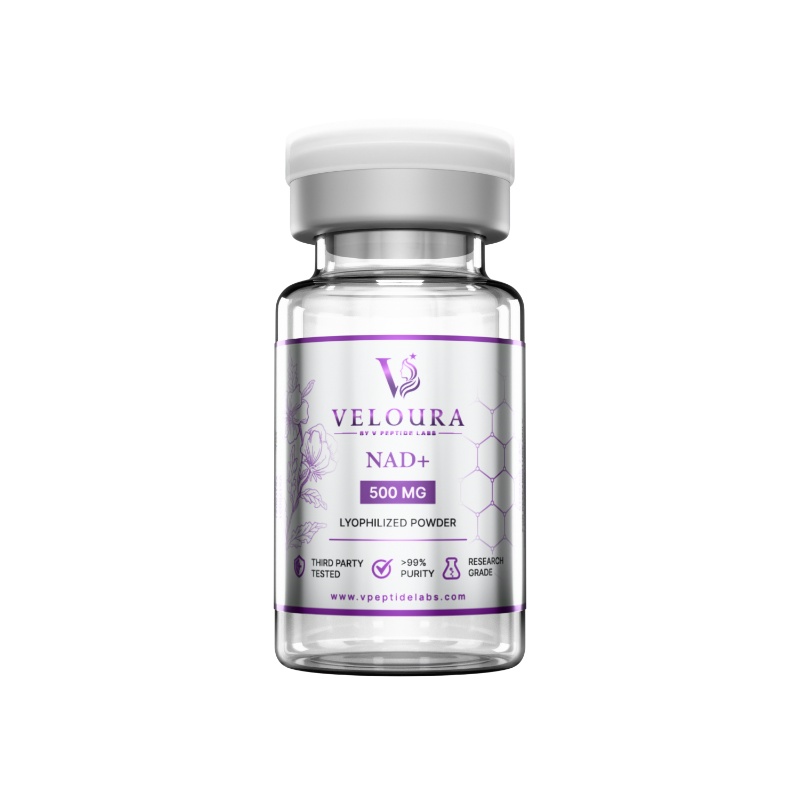
NAD+ is a research-grade coenzyme supplied as a lyophilized powder for controlled laboratory applications. With a molecular weight of 663.43 g/mol, NAD+ is widely studied for its involvement in cellular energy transfer, redox reactions, and metabolic signaling.
Found in living cells, NAD+ supports biochemical processes associated with mitochondrial function, enzyme activity, and cellular metabolism. Its role in oxidation-reduction reactions makes it an important compound for researchers examining energy production, DNA repair pathways, and cellular responses to stress.
This formulation is intended exclusively for qualified professionals conducting in vitro research.
What Is NAD+?
NAD+ is the oxidized form of nicotinamide adenine dinucleotide, a coenzyme that participates in electron-transfer reactions. It helps facilitate biochemical processes involved in energy metabolism and cellular regulation.
Although some online listings refer to NAD+ as an NAD+ peptide, NAD+ is chemically classified as a coenzyme rather than a peptide. Its biochemical characteristics differ from peptide-based research compounds and related NAD+ precursors, such as NMN.
Researchers may investigate NAD+ in cellular models involving mitochondrial activity, redox balance, enzyme pathways, and metabolic regulation.
NAD+ Research Applications
NAD+ has several potential applications in biochemical and cellular research. Common areas of investigation include:
Mitochondrial and Energy Research
NAD+ is studied in relation to oxidative phosphorylation, mitochondrial activity, and cellular energy transfer. Researchers may examine how changes in redox balance influence energy-related pathways.
Enzyme Pathway Studies
NAD+-dependent enzymes, including sirtuins and PARP proteins, are important subjects in biochemical research. Laboratory studies may explore their activity and relationship with cellular signaling.
Cellular Aging Models
NAD+ research may involve cellular stress, metabolic changes, and mechanisms associated with aging-related biology. These studies help researchers examine complex intracellular processes without implying a confirmed therapeutic outcome.
Redox and Metabolic Research
Because NAD+ participates in oxidation-reduction reactions, it is relevant to studies of electron transfer, metabolic regulation, and cellular homeostasis.
Product Specifications
| Specification |
Details |
| Product Name |
NAD+ |
| Chemical Name |
β-Nicotinamide Adenine Dinucleotide |
| Classification |
Research-grade coenzyme |
| Molecular Weight |
663.43 g/mol |
| Physical Form |
Lyophilized powder |
| Intended Use |
In vitro laboratory research |
| Pre-Reconstitution Storage |
Cool, dry conditions |
| Post-Reconstitution Storage |
2°C–8°C |
| Recommended Use Period After Reconstitution |
10–14 days under sterile conditions |
The available product information does not confirm specific 500mg or 1000mg package sizes. Researchers should review the current product listing and batch documentation for available quantities.
NAD+ vs NMN
NAD+ and NMN are related compounds frequently discussed in research involving nicotinamide metabolism. NAD+ functions as a coenzyme in redox reactions and enzyme-associated processes, while NMN is a nucleotide intermediate involved in NAD+ biosynthesis.
The two compounds have different chemical structures and research applications. When comparing NAD+ and NMN, researchers should consider the study objective, experimental model, analytical requirements, and compound specifications.
Why Choose NAD+ Research Material?
This NAD+ research chemical is supplied in a lyophilized format for laboratory handling and controlled experimental preparation. Its defined molecular weight supports accurate compound identification and analytical planning.
Before beginning research, qualified personnel should review the product documentation, storage requirements, compatibility information, and applicable laboratory safety procedures. Purity, batch testing, and analytical certification should be confirmed through the relevant documentation.
Frequently Asked Questions
Is NAD+ a peptide?
No. NAD+ is a coenzyme and dinucleotide. The phrase “NAD+ peptide” is sometimes used in online searches, but it does not accurately describe NAD+’s chemical classification.
Is NAD+ available in 500mg or 1000mg sizes?
The supplied product information does not confirm these specific formats. Check the current product listing for available quantities.
What is the NAD+ peptide price?
The NAD+ peptide price depends on the package size, supplier, and available batch. Confirm current pricing directly through the product listing.
Can I buy NAD+ peptide online?
NAD+ research material may be available through qualified laboratory suppliers. Before ordering, verify the supplier’s documentation, product specifications, and research-use requirements.
How should NAD+ be stored?
Store the lyophilized powder in a cool, dry place. After reconstitution, maintain it at 2°C–8°C and use it within 10–14 days under sterile conditions, following validated laboratory procedures.
Is this NAD+ product intended for human use?
No. This product is supplied strictly for laboratory-based, in vitro research. It is not for human or veterinary use.
Final Overview
NAD+ is a research-relevant coenzyme used to investigate cellular energy transfer, redox reactions, mitochondrial processes, and enzyme-dependent pathways. Its lyophilized format and defined molecular weight make it suitable for qualified laboratory researchers conducting controlled biochemical studies.
Research use only. Not for human or veterinary use.

Reviews
There are no reviews yet.